
Free Appropriate Public Education (FAPE)
Every child with a disability has the right to an education that meets their unique needs—at no cost to parents. (20 U.S.C. §1400(d); 34 C.F.R. §300.101)
Least Restrictive Environment (LRE)
Children must learn alongside peers without disabilities as much as possible. (34 C.F.R. §300.114)
Procedural Safeguards — Your Legal Protections
- Prior Written Notice (PWN) before any change
- Consent or refusal of evaluation
- Access to records (FERPA; 34 C.F.R. §300.613)
- Right to dispute decisions through mediation or due process
Tip: “If it’s not in writing, it’s not official.”
- Request Evaluation: Submit a written request to the principal or special education director. In Illinois, schools must respond within 14 school days.
- Assessment: Schools must evaluate in all areas of suspected disability. (34 C.F.R. §300.304)
- IEP Meeting: You are an equal team member. Bring evaluations, reports, and your priorities.
- Implementation: Once signed, the IEP must be carried out as written.
- Review and Revision: The IEP is reviewed annually or anytime you request a meeting.
The Lawful Restoration Model (AAN 2025)
When behavior escalates, law requires positive supports, not punishment. (34 C.F.R. §300.324(a)(2)(i); 20 U.S.C. §1415(k))
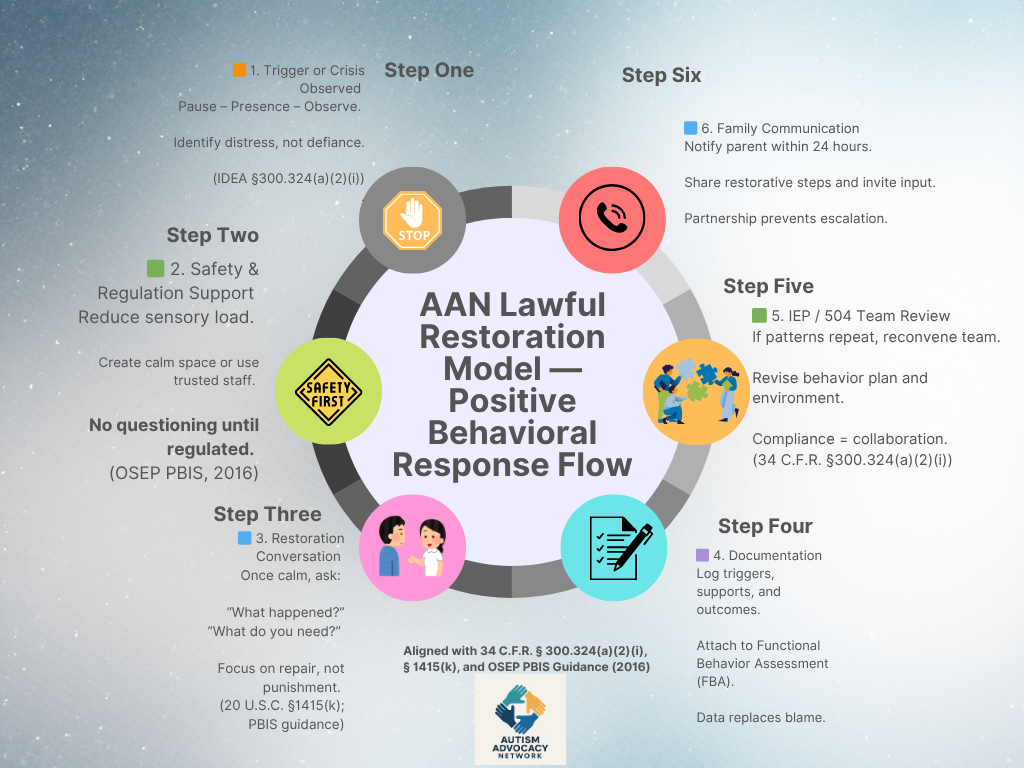
Figure 1. AAN Lawful Restoration Model — Positive Behavioral Response Flow.
7 Steps to Lawful Response:
- Trigger observed: Pause and assess.
- Safety & regulation support: Create calm.
- No questioning until regulated.
- Restoration conversation: Focus on needs.
- Documentation: Facts over assumptions.
- Team review: If patterns repeat.
- Family communication: Within 24 hours.
Schools must adapt environments so students can learn and regulate. (34 C.F.R. §300.324(a)(2)(i); OSEP PBIS Letter, 2016)
Parent Checklist:
- ☐ Lighting and noise reviewed
- ☐ Seating supports and movement breaks
- ☐ Quiet space available
- ☐ Sensory tools written in IEP
- ☐ Accommodations listed under "Supplementary Aids and Services"
If you disagree with a school decision:
- Informal meeting
- Mediation
- State Complaint
- Due Process Hearing
The "Stay-Put" Rule
Your child’s current placement and services remain unchanged until the dispute is resolved. (20 U.S.C. §1415(j))
Macon County / Decatur, IL Area:
- Autism Advocacy Network (AAN)
- Family Matters PTIC
- Land of Lincoln Legal Aid
- MPSED (Macon-Piatt Special Education District)
- Church Inclusion Partners
Keep a running log of your IEP meetings, decisions, and follow-ups. Documentation is your shield.
Meeting Log
Date, attendees, decisions, next steps.
Service Summary
Minutes, provider, frequency, progress notes.
Follow-Up Actions
Email requests, PWN responses, timelines.